

Leading up to the release of my debut novel—Midnight Miami, arriving this May 12, 2026— I will discuss some of my favorite noir/crime novels set in Miami.
And I did not save the best for last. - SMC
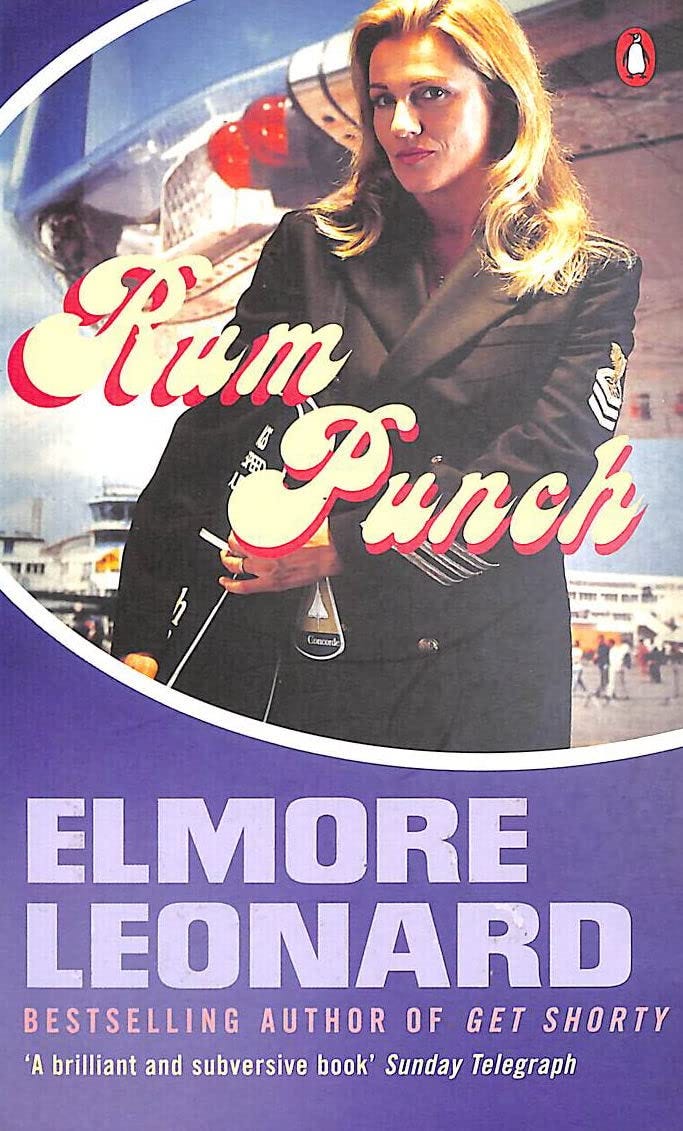
Rum Punch will always hold a special place in my heart. It was not only my introduction to audiobooks, but also my first real introduction to Elmore Leonard.
Elmore Leonard (1925–2013) began his writing career in the 1950s, initially publishing Western novels and short stories before transitioning into crime fiction in the late 1960s. Over the next several decades, Leonard became one of the most influential crime writers in American literature, known for his stripped-down prose, razor-sharp dialogue, and refusal to romanticize criminals or law enforcement. His writing emphasized character voice over exposition, allowing stories to unfold through conversation and behavior rather than authorial explanation.
Leonard’s connection to South Florida crime fiction strengthened in the 1980s, when he began setting many of his novels in Miami and the surrounding region. Books like LaBrava, Glitz, Maximum Bob, and Rum Punch helped define the literary version of Florida as a place where crime, absurdity, desperation, and dark humor coexist. Leonard treated South Florida not as an exotic setting, but as a working ecosystem of hustlers, cops, retirees, smugglers, and people one bad decision away from disaster. That tone would go on to influence generations of crime writers, filmmakers, and television creators.
I wish I had a more noble way to say that I discovered Leonard, but the truth is I owe it to Quentin Tarantino. For his follow-up to Pulp Fiction, Tarantino chose to adapt Rum Punch into what became both a crime film and a love letter to Pam Grier: Jackie Brown.
The movie is fairly faithful to the book, with a few changes. In the novel, the main character is Jackie Burke, a white woman in her mid-40s. In the film, she becomes Jackie Brown, portrayed by Pam Grier in a career-redefining comeback performance. The biggest change is the setting, with Southern California replacing South Florida.
Published in 1992, Rum Punch follows Jackie Burke, a flight attendant supplementing her income by smuggling cash for a small-time arms dealer. When she is caught by federal agents, she is forced into a negotiation for her freedom that becomes a layered double-cross involving criminals, law enforcement, and Jackie’s survival instincts. Like many Leonard novels, the story is less about plot twists and more about character collisions, where each person believes they are the smartest person in the room until proven otherwise.
South Florida in Rum Punch functions as more than backdrop. Leonard uses Miami and the surrounding region as a pressure cooker where money moves quickly, loyalties shift constantly, and people operate in the gray space between legitimate business and criminal opportunity. The geography of South Florida, with its ports, tourism economy, transient populations, and proximity to international trade routes, naturally supports Leonard’s style of crime storytelling. It is a world where people do not necessarily see themselves as criminals. They see themselves as practical.
And as the people in Leonard’s world see themselves as practical, they also allow themselves to be seen. The criminals in Leonard’s world often hide in plain sight.
Jackie Burke does not operate from shadows or safe houses. She works a public-facing job as a flight attendant, moving through airports, hotels, and commercial spaces where thousands of legitimate travelers pass every day. Her smuggling operation depends on normalcy. She succeeds because she looks like someone doing a job, not someone committing a crime.
The same applies to Ordell Robbie, who operates as a small-time arms dealer but presents himself as a businessman. He conducts transactions through normal social interactions, retail spaces, and casual meetings rather than underground networks. Max Cherry, the bail bondsman, exists even closer to legitimacy. He is licensed, visible, and publicly accountable, yet operates in constant proximity to criminal ecosystems. Leonard’s criminals are not isolated from society. They are embedded in it.
Even secondary characters follow this pattern. People meet in bars, offices, parking lots, and living rooms. Deals happen during normal conversations. Money moves through routine channels. Violence, when it happens, feels abrupt because it interrupts ordinary environments. Leonard’s world is not one where criminals hide. It is one where they blend.
Elmore Leonard understood something fundamental about crime in places like South Florida. Most people involved in crime do not see themselves as villains. They see themselves as workers solving financial problems. They use the same infrastructure as everyone else. Airports. Banks. Restaurants. Retail stores. The difference is not where they exist. It is what they are willing to do inside those spaces.
For me, discovering Rum Punch was more than discovering a novel. It was discovering a way to look at crime stories. Leonard showed that tension does not come from how dark a story is. It comes from how normal it feels. Crime becomes more unsettling when it happens in daylight, in familiar places, carried out by people who believe they are making rational decisions.
And if you want to understand crime fiction that still feels modern thirty years later, start with Elmore Leonard. Not because he made crime glamorous. Because he made it recognizable.