One of the most flattering things about writing Midnight Miami was all the support and love that I received when the book came out in May.
And then there was quiet. Apparently, books are not read instantaneously with reviews generated at the same speed.
But finally, the quiet ended. Here are the first reviews from Amazon
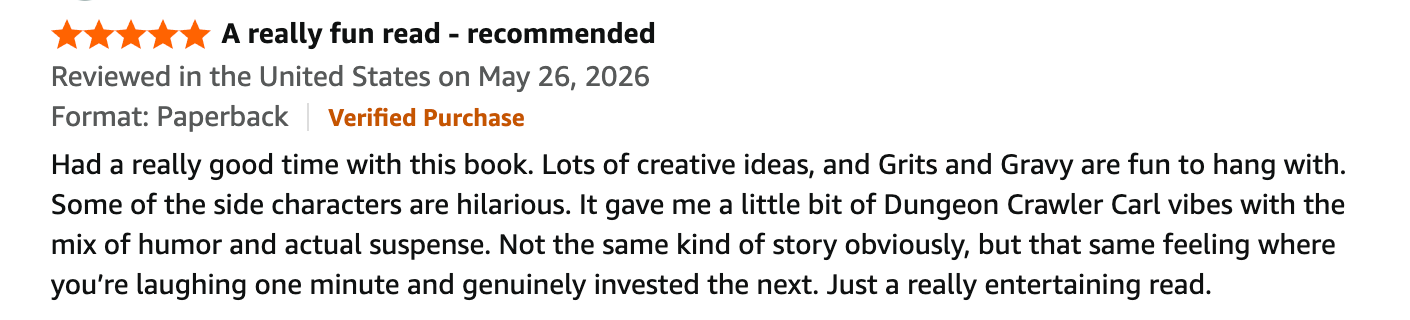
and Barnes & Noble.

Thank you to everyone who has purchased Midnight Miami, which is available at Amazon, Barnes & Noble, or your favorite local bookstore. And please keep the reviews coming! —SMC
There was once a hotel in Coconut Grove where cocaine traffickers, FBI agents, rock stars, politicians, movie stars, and undercover cops could all be drinking in the same bar on the same night.
It was called The Mutiny at Sailboat Bay.
And without it, Midnight Miami would be a very different novel.
When I began researching Midnight Miami, I quickly discovered that finding information about Miami in 1981 wasn’t the problem.
There was too much information.
The pre-Miami Vice version of the Magic City has been overshadowed by pastel jackets and Ferraris, but it is remarkably well documented. There are memoirs, newspaper archives, documentaries, oral histories, and books covering nearly every corner of the city’s transformation during the late 1970s and early 1980s.
One place kept appearing over and over again.
The Mutiny at Sailboat Bay.
The Mutiny began life very differently than the legend it eventually became.
When developer Burton Goldberg purchased the property in the early 1970s, it had already lived several lives, including one as a swingers resort. Goldberg transformed it into something entirely different: an extravagant boutique hotel whose themed suites included names like Moroccan Fantasy, Midnight Express, Zapata’s Retreat, and Lunar Dreams. It was glamorous, theatrical, and unlike anywhere else in Miami.
As the cocaine trade exploded during the late 1970s, the clientele changed.
The Mutiny evolved into the unofficial headquarters of the Cocaine Cowboy era.
Drug traffickers mingled openly with lawyers, politicians, judges, entertainers, athletes, federal agents, local detectives, and journalists. It became one of the few places where everyone occupied the same room while pretending not to notice who everyone else was.
The lines between the underworld and respectable society became wonderfully—and dangerously—blurred.
Which made it perfect inspiration for Midnight Miami.
As I started writing this article, I realized I had a problem.
Where do you begin?
Do you start with Raul Diaz, whose remarkable law enforcement career inspired not one, but two characters in Midnight Miami: homicide detective Rafael Pérez and vice detective Ricardo “Sweetpea” Castilla?
Do you talk about the Mutiny Girls, the glamorous hostesses who escorted guests to their tables, remembered their favorite champagne, and, according to legend, occasionally hid firearms for particularly important patrons? They eventually inspired Patti from Daytona Beach.
Or do you begin with someone like Mario Tabraue, the larger-than-life drug trafficker who supposedly helped inspire Scarface’s Tony Montana, but who definitely owned a pet chimpanzee named Caesar that liked wearing turtlenecks?
Every one of those people deserves an article of their own.
Instead, I’d rather introduce you to the book that introduced them to me.
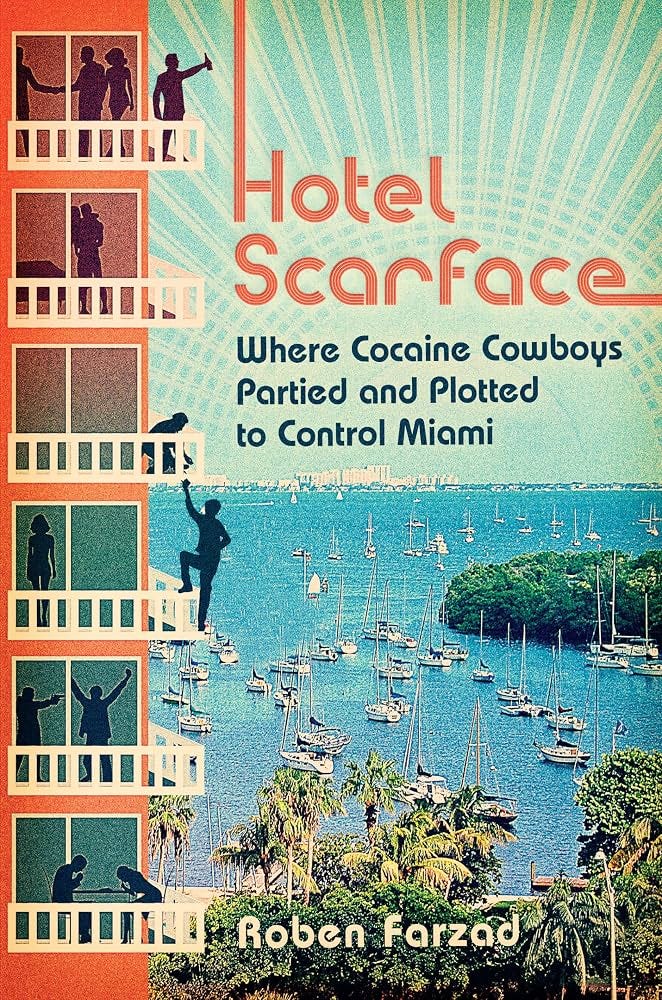
Hotel Scarface
Roben Farzad’s Hotel Scarface: Where Cocaine Cowboys Partied and Plotted to Control Miami became, without question, the single most valuable research book I read while writing Midnight Miami.
If your image of early-1980s Miami comes primarily from Miami Vice, this book will completely reset it.
Farzad, who grew up in Miami and now hosts NPR’s Full Disclosure, tells the city’s story through the people who passed through the Mutiny’s doors. Beginning with the aftermath of Fidel Castro’s revolution and the Bay of Pigs, he follows Miami through the rise of marijuana smuggling, the arrival of yeyo in the 1970s, the Mariel boatlift, and the violent birth of the Cocaine Cowboy era.
The focus on the people behind these stories gives depth to all of these historic events by getting to know the people involved. The history lesson is enhanced by the outrageous cast of characters, whose real life stories and adventures would be deemed implausible if presented as fiction.
At some point while reading Hotel Scarface, I stopped asking, “Did this really happen?”
Instead, I started asking, “How have I never heard this story before?”
Take Ricardo “Monkey” Morales.
Off the top of my head, he fought in the Belgian Congo, worked as a CIA asset, became a major drug trafficker, survived a car bombing, and somehow remained one of the most fascinating people in an entire book filled with fascinating people.
And trust me.
That’s barely scratching the surface.
The greatest compliment I can give Hotel Scarface is that it changed my novel.
I originally picked it up to verify a few historical details.
Instead, I found myself filling notebooks with ideas, revising scenes, and discovering characters who felt almost too unbelievable to be real.
Fortunately for me, they were.
In the coming weeks, in “Tales from the Mutiny,” I’ll probably write about Raul Diaz.
Or the Mutiny Girls.
Or Mario Tabraue (or his chimp, who also wore a Rolex).
Or Burton Goldberg himself.
That’s the problem with a place like the Mutiny.
Every person who walked through its doors has a story worth telling.
And if you’re trying to write a novel set in Miami during the summer of 1981, you couldn’t ask for a better place to begin.
Purchase Roben Farzad’s Hotel Scarface: Where Cocaine Cowboys Partied and Plotted to Control Miami at Amazon or your favorite bookstore today.