

In the world of Midnight Miami, Gravy Watkins is famous as one of the greatest running backs in professional football history. At the height of his career, he walked away from the game to become a private detective alongside his best friend, former race car driver Grits McCoy.
But appearances can be deceiving.
As the novel unfolds, readers discover that Gravy Watkins has lived a much longer life than anyone realizes. That gave me an opportunity I thoroughly enjoyed as a writer: taking one fictional character and placing him alongside real people during extraordinary moments in history.
I call it Gravy’s “history of mystery.”
If Gravy was going to fight during World War II, I wanted him to serve beside real heroes rather than fictional ones.
That decision introduced me to one of the most remarkable military units I have ever researched.
The 761st Tank Battalion.
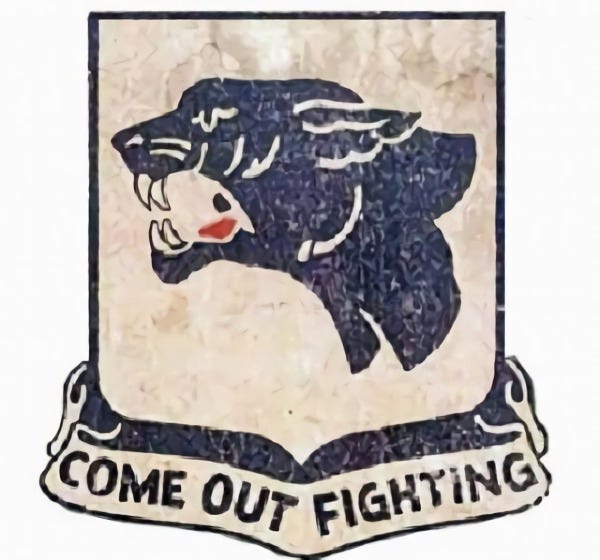
Nicknamed the Black Panthers, the 761st Tank Battalion was the first African American armored battalion to see sustained combat during World War II. Formed in 1942, the battalion trained for nearly two years while overcoming not only the rigors of preparing for armored warfare but also the segregation and discrimination that still existed within the United States Army. Despite repeatedly proving themselves during training, they waited far longer than white armored units before finally receiving orders for Europe.
When they finally entered combat in November 1944 under General George S. Patton’s Third Army, they immediately demonstrated exactly what they were capable of. Over the next six months, the battalion fought continuously across France, Belgium, Luxembourg, Germany, and Austria, participating in some of the fiercest fighting of the European campaign. Their unofficial motto, “Come Out Fighting,” perfectly reflected both their battlefield performance and the determination required simply to earn the opportunity to fight.
One of the battalion’s defining moments came during the Battle of the Bulge. As German forces launched their surprise offensive through the Ardennes in December 1944, the Black Panthers helped blunt the attack by supporting infantry units under brutal winter conditions. They fought through snow, freezing temperatures, heavy artillery, and determined German resistance while helping hold critical positions during one of the largest and bloodiest battles fought by the United States Army. By the end of the war, the 761st had compiled an extraordinary combat record, earning a Presidential Unit Citation decades later in recognition of their service.
Their battlefield victories deserve to be remembered.
So do the atrocities they witnessed.
One chapter in Midnight Miami bears the title “Come Out Fighting,” borrowing the battalion’s proud motto. In that chapter, the man who would eventually become Gravy Watkins undertakes a secret mission of vengeance.
That mission is fiction.
The events that inspired it are not.
On December 17, 1944, during the opening days of the Battle of the Bulge, troops from the German Waffen-SS murdered 84 American prisoners of war near the Belgian crossroads of Malmedy. The victims had surrendered after their convoy was overwhelmed, but instead of being taken prisoner, they were assembled in a field and systematically shot. Some survived by pretending to be dead beneath the bodies of their fellow soldiers. News of the massacre spread rapidly among Allied forces, hardening attitudes toward the SS and becoming one of the defining atrocities committed against American troops in the European theater.
While researching Malmedy, I encountered another massacre that receives far less attention but deserves to be remembered alongside it.
On December 17, 1944, eleven African American soldiers from the 333rd Field Artillery Battalion became separated from their unit during the German offensive near the Belgian village of Wereth. After seeking shelter with a local family, they were captured by members of the Waffen-SS. Rather than being treated as prisoners of war, the eleven men were tortured and executed. Their bodies were later discovered showing evidence of severe abuse before death. For decades, the Wereth Massacre remained largely overlooked, even though it stands as one of the clearest examples of the particular brutality inflicted upon Black American soldiers during the war.
One of the privileges of writing historical fiction is the opportunity to introduce readers to stories they may never have encountered otherwise.
Gravy Watkins is fictional.
The men of the 761st Tank Battalion were not.
Neither were the soldiers murdered at Malmedy or Wereth.
Those men displayed extraordinary courage under circumstances that no novelist could improve upon. My only job was to place a fictional character beside them without diminishing what they accomplished.
If Midnight Miami encourages even a handful of readers to learn more about the Black Panthers of the 761st Tank Battalion, then Gravy’s journey through World War II will have accomplished exactly what I hoped it would.