

If you want to understand Midnight Miami, you have to understand the city behind it.
Not the neon version.
Not the television version.
The real one.
(Part I of this series can be found here.)
Midnight Miami, my supernatural detective novel arriving May 12, 2026 (and available for pre-order at Amazon and Barnes & Noble), takes place in Miami in 1981.
While the book features paranormal detectives, werewolves, and possibly a leprechaun, it is grounded in real places—restaurants, churches, and storefronts that existed then and, in some cases, still exist today.
Here are a few more of them.
Christy’s Restaurant, 3101 Ponce De Leon Blvd, Coral Gables, FL
When I needed a place that was not Burger King for Grits and Gravy to eat, the choice was simple.
“Miami’s Premier Steakhouse.”
Christy’s Restaurant opened in 1978 in Coral Gables and quickly established itself as one of Miami’s most respected steakhouses. Known for its classic approach—prime cuts of beef, fresh seafood, and old-school service—it built a reputation as a place where business deals were made and special occasions were celebrated.
Decades later, Christy’s remains open, serving much the same menu and maintaining the same atmosphere that made it successful in the first place. White tablecloths, dim lighting, and a sense that time moves a little slower inside its walls.
In Midnight Miami, it becomes the kind of place where conversations matter—and what is said over dinner carries weight long after the plates are cleared.
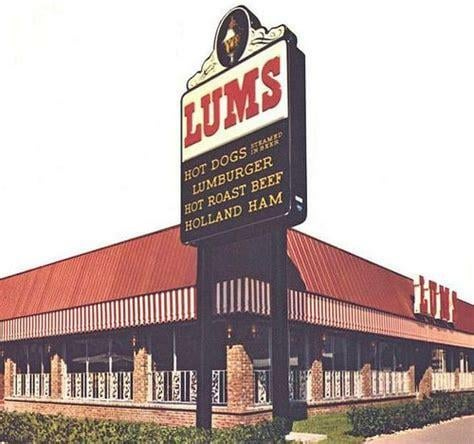
Lum’s, 461 41st Street, Miami Beach
Lum’s was a restaurant chain founded in Miami in 1956 by brothers Stuart and Clifford Perlman. The concept was simple and effective: casual dining centered around hot dogs steamed in beer, paired with inexpensive drinks and a laid-back atmosphere.
The chain expanded rapidly during the 1960s and 1970s, eventually growing to hundreds of locations across the United States.
But like many fast-growing restaurant chains, Lum’s struggled to maintain its identity as it expanded. Changes in ownership, shifting consumer tastes, and overextension led to a steady decline. By the early 1980s—the exact period when Midnight Miami is set—Lum’s was already losing ground. Within a few years, the chain had effectively disappeared.
My favorite thing about Lum’s is still their slogan:
“Hot dogs steamed in beer.”
In Midnight Miami, I used that wholesome, all-American image to stage a crime scene at their original Miami Beach location—461 41st Street, which today is a barber shop.
Gesù Catholic Church, 118 NE 2nd St, Miami
Gesù Catholic Church is the oldest Catholic church in Miami, with roots dating back to 1896. Founded by Jesuit priests, the church originally served a small but growing community in what was then a developing city. The current building, completed in 1921, stands in the heart of downtown Miami and reflects the city’s early architectural ambitions.
Over the decades, Gesù has served a constantly evolving congregation, adapting to waves of immigration and cultural change. While much of downtown Miami has been rebuilt around it, Gesù continues to operate, offering services in multiple languages and serving as a quiet counterpoint to the energy of the surrounding streets.
In Midnight Miami, it represents something different from the restaurants and bars—a place where the noise of the city fades, at least temporarily.
The more I looked into these places, the more I realized that Miami in 1981 wasn’t just what made the headlines.
It was a steakhouse where people said things they wouldn’t say anywhere else.
A hot dog joint that felt like it would be there forever—until it wasn’t.
A church that somehow stayed put while everything around it changed.
That’s the version of Miami I wanted in Midnight Miami.
Not just the chaos. The places where it all happened.
Midnight Miami, the first novel by S. M. Chase, arrives May 12, 2026.